
General Cell Lines and Cell Cultures




ATCC Trypsin/EDTA, 1X, 100 ML
The Trypsin-EDTA Solution is 0.25% Trypsin/0.53 mM EDTA in Hanks Balanced Salt Solution without calcium or magnesium. For dissociation of cell monolayers. Trypsin-EDTA solution is suitable for most but not for all adherent cell lines. This product has applications for cell culture, cell growth, and viability. For cell line-specific information, please go to the appropriate product page on the web, refer to the product sheet supplied with the cell line, or contact ATCC Technical Service.

iQ Biosciences Human PBMCs, 100M cells/vial
High-quality, high-viability (> 90%) peripheral blood mononuclear cells (PBMCs) from healthy blood donors sourced from a world-renowned blood center. Used for a wide variety of immunology-based applications, including in-vitro immunoassays and ex-vivo applications. All orders come with an iQ Certificate of Analysis.The following donor requests can be accommodated if inventory is available: - Single or multiple donors for a particular product (SKU). Indicate the number of vials from each individual donor - Positive or negative for EBV or CMV (for healthy donors only) - Good responder or non-responder to tetanus antibody (for healthy donors only) - HLA types for Class I and Class II alleles (for healthy donors only) - Donor(s) with a higher percentage of the cells of interest (e.g., B cells, CD4+ cells, CD8+ cells, NK cells, etc.) - Gender, age, body mass index (BMI), or ethnicity


ATCC LL 29 (AnHa); Lung Fibroblast; Human (Homo sapiens)
LL 29 (AnHa) cells are lung fibroblasts derived from human lung tissue with idiopathic pulmonary fibrosis. Use these cells to advance your pulmonary disease research.

ATCC CAMA-1; Breast Adenocarcinoma; Human (Homo sapiens)
CAMA-1 is an epithelial-like cell that was isolated from a pleural effusion of a 51-year-old, White, female with breast adenocarcinoma.

ATCC Candida glabrata
An ampoule containing viable cells (may include spores and mycelia) suspended in cryoprotectant.

Lonza Walkersville D-CASMC - Diabetes Type I
Clonetics coronary artery smooth muscle cells are isolated from human donors that have been diagnosed with diabetes type I or type II disease Further donor information including medications BMI and disease duration may be obtained by contacting Lonza scientific support Diseased cells are grown in the same optimized media system as normal human coronary artery smooth muscle cells Diabetic CASMC cultures can be used for experimental applications in diabetic-related cardiovascular pharmaceutical development vascular pathology including atherosclerosis Clonetics D-CASMC diseased human aortic smooth muscle cells and media are convenient and easy to use allowing the researcher to focus on results Cryopreserved Clonetics CASMC are shipped in third passage Proliferating Clonetics CASMC are shipped in fourth passage

ATCC hTERT-HME1; Mammary Epithelium; Human (Homo sapiens)
For-profit organizations: For every order of this item, you must provide a signed Material Transfer Agreement Addendum for Screening Application. We cannot ship this item until we receive this addendum. The person signing the addendum as the principal investigator must match the end user as listed on the applicable sales order for the item.Email the signed addendum to SalesPermits@atcc.org with a reference to both your account and sales order numbers. Once received, your addendum will be reviewed, and this item will be released for shipment if all requirements are met. Additional fees may apply if this product is being used for a screening use (ATCC ACS-2103F), and these fees will be applied after your order is confirmed. If you need assistance with your order, please contact our Customer Care team.

ATCC's L-Glutamine, 200 mM, 100X
L-Glutamine 200 mM Solution (29.23 mg/mL). L-Glutamine is an essential amino acid required by virtually all mammalian and insect cells grown in culture. L-Glutamine is also more labile in cell culture solutions than other amino acids. The rate and extent of L-glutamine degradation are related to storage temperatures, age of the product, and pH. All cell culture media are formulated to contain appropriate amounts of L-glutamine to support cell growth well beyond the expiration date of the media. However, if L-glutamine is suspected to be a limiting factor during cell culture, a simple test of ‘spiking’ the medium with a small amount of L-glutamine will determine whether or not more is required. Simply add a small amount of L-glutamine (~ 2 mM final concentration) to the culture medium. If the cell growth rate increases, L-glutamine is most likely deficient and more should be added. It has applications for cell culture, cell growth, and viability.

Biochain Institute Inc Paraffin Tissue Section - Multiple Sclerosis Disease: Brain: Postcentral Gyrus, 5 slides/PK
BioChain's tissue products are based on the sample repository network established following the IRB-approved ethical standard and procedures. BioChain's formalin fixed paraffin embedded (FFPE) tissue section line encompasses a large selection of tissue sections which are suitable for immunohistochemistry and in situ hybridization assays. The tissue sections are approximately 5 um thick. Each slide contains tissue from single human diseased sample. Documentation of tissues' clinical histories may be available upon request. For those customers who want to perform FFPE DNA and RNA isolation, BioChain can provide tissue section slices in tubes instead of mounting them on glass slides.

ATCC 3T3-L1; Embryonic Fibroblast; Mouse
3T3-L1 is a fibroblast that was isolated from the embryo of a mouse. This cell line can be used to study the basic cellular mechanisms associated with diabetes, obesity, and related disorders.
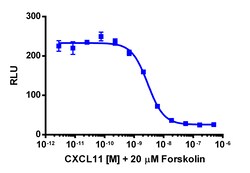
Eurofins Discoverx cAMP Hunter CHO-K1 CXCR3 Gi Cell Line, 2 vials. (95-0054C2)
The cAMP Hunter CXCR3 Gi cell line is a stable, engineered cell line for use in studying drug candidates (small molecules or biologics) targeting GPCRs. This cell line enables assessment of ligand (e.g. CXCL11/I-TAC) based activation of CXCR3 GPCR activity via detection of decreasing levels of intracellular cAMP. This product uses EFC technology. The cells overexpress wild type CXCR3, a naturally Gi/Go coupled GPCR. Upon activation of CXCR3, the decrease in levels of intracellular cAMP leads to a decreased signal from EFC when the cAMP detection kit is applied. This stable modified cell line is provided as two vials of cryopreserved cells. For detailed product information, User Manual and datasheet, visit www.discoverx.com/gpcr.